

Who We Are
Time is luxury
The minimum maturation of our sturgeon species is 6 years (Baerii) and the maximum is between 15 (Kaluga) and 20 years (Beluga).
We want you to understand the effects of the ageing process and how this, along with water quality and diet, can impact the flavour of the caviar.
Time is quality
You can’t appreciate caviar without properly tasting it. Ahrelia encourages the philosophy ‘more is more’, as a minuscule serving of caviar with a massive price tag is not what we’re all about.
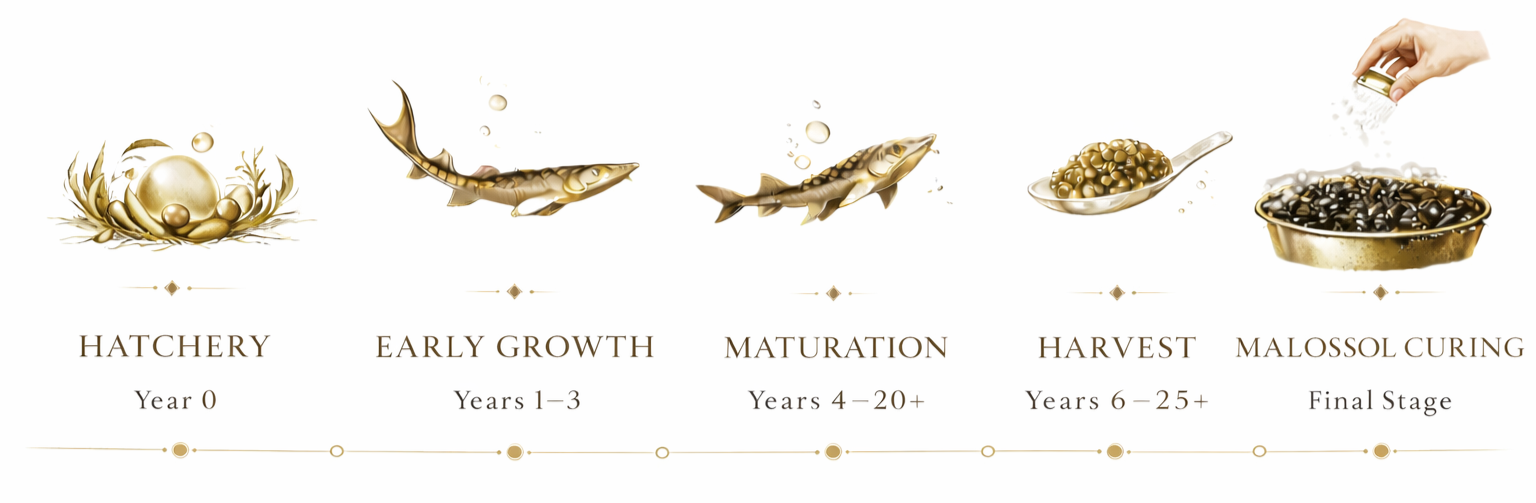
More Than Flavour
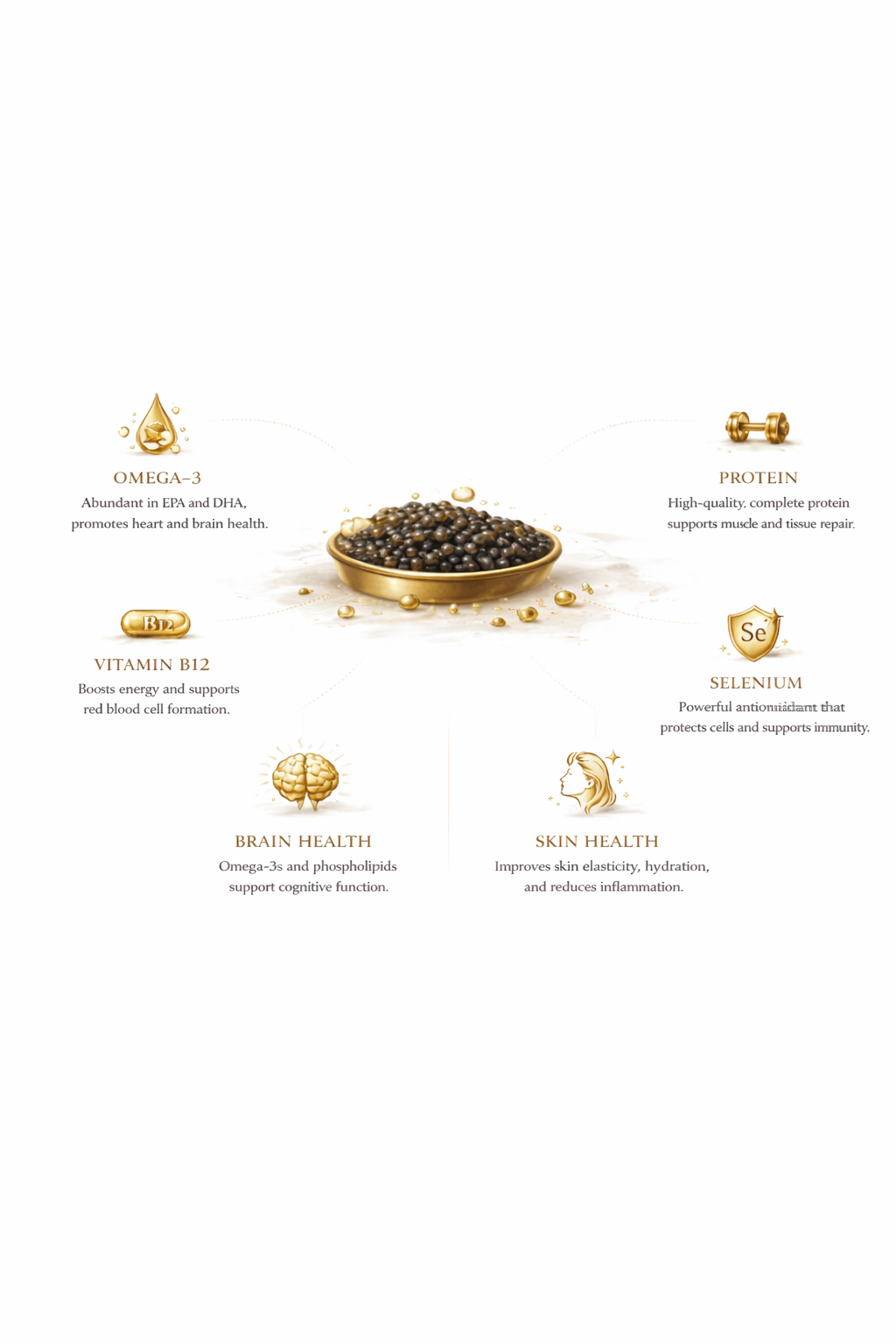
Naturally rich in phospholipids and omega-3 fatty acids,
caviar offers benefits for cognitive function, heart health and anti-inflammation.
Caviar is also high in protein and essential minerals.
The Benefits of Unpasteurised
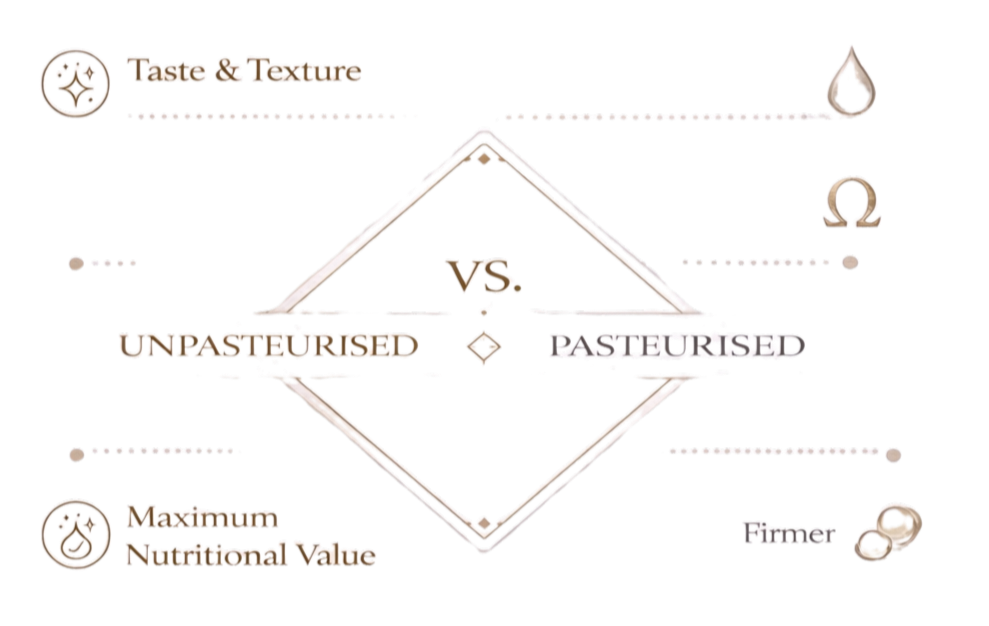
Taste & texture
Delicate pearls with a complex, oceanic depth of flavour.
Pasteurisation dulls this character, resulting in a firmer, less expressive caviar.
Maximum nutritional value
Naturally rich in Omega-3 fatty acids, Vitamin B12 and Selenium.
Heat used during pasteurisation can reduce the benefits of these essential nutrients.
Unpasteurised caviar must be kept between -2°C to 0°C and consumed fresh.
Due to its raw nature, it is not recommended for those who are pregnant or with compromised immunity.